 EN
EN 

AI Summary
- Digital Product Passport (DPP) is product data defined by the EU's Ecodesign for Sustainable Products Regulation, accessed by scanning a product code. It must be machine-readable and based on open standards, with information available throughout the product lifecycle.
- From 18th February 2027, any transport or industrial battery above 2 kWh sold in the EU must carry a DPP. The rollout starts with batteries and later expands to manufacturing, textiles, and furniture; manufacturers selling in the EU must comply wherever based.
- DPP access has three levels: Public, Legitimate interest for suppliers, recyclers, and repairers, and Authorities for compliance evidence.
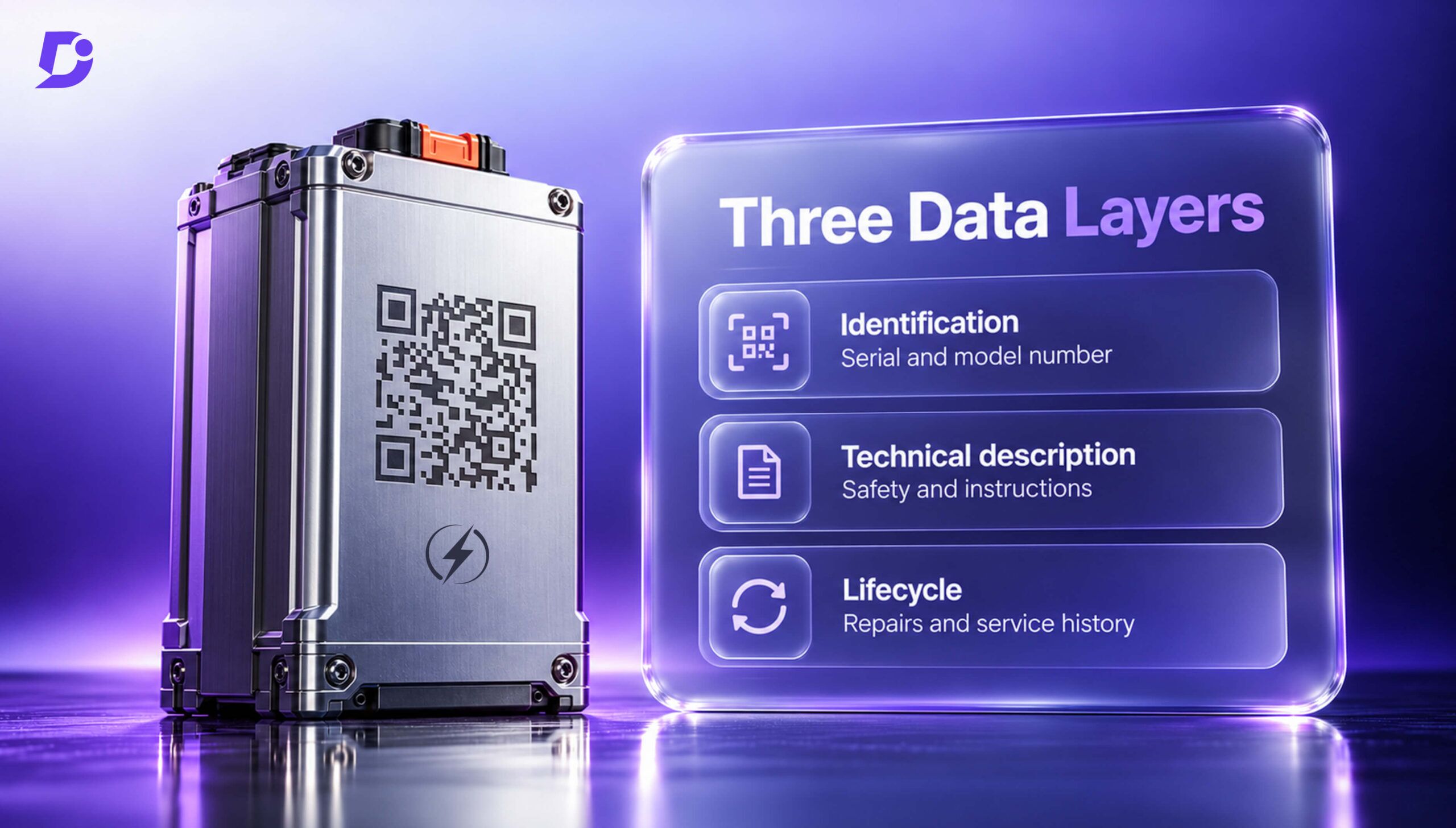
- Its three information layers are Identification, Technical description, and Lifecycle, covering product identity, safety and use, service history, repairs, and replacement components.
- Technical writers need metadata-rich modular content, product data management using PLM systems, and digital delivery tools with sophisticated search and AI chatbots.
AI-generated content. It may contain errors.
See Document360 in action
What Is the Digital Product Passport?
The Digital Product Passport (DPP) is a set of product data defined by the EU’s Ecodesign for Sustainable Products Regulation (ESPR), allowing anyone to access all product information by scanning a code on the product. The DPP will help companies, consumers, retailers, and public organizations access reliable product information digitally rather than reading printed product manuals. The important aspect of DPP is that product information is available throughout its lifecycle. A separate DPP registry is used by authorities for compliance checks and law enforcement. The DPP will progressively roll out, starting with batteries. The DPP will expand into other industries such as manufacturing, textiles, and furniture in subsequent years.
The DPP comes into effect from 18th February 2027 for electric vehicle batteries. This means that any transport or industrial battery above 2 kWh sold in the EU must carry a DPP. Given that DPP contains instructions for use, safety information, and repair procedures, this regulation makes the technical writer’s job very valuable. The DPP regulation mentions that DPP is not a PDF behind a QR code. The content must be machine-readable and based on open standards.
This isn’t only an EU concern. Any manufacturer that sells products in the EU must comply, wherever it is based, so technical writers worldwide will feel the impact.
Who Reads a DPP: Three Levels of Access
Technical writers need to write about dismantling information that includes diagrams, disassembly sequences, fastening types, required tools, and warnings about damaging parts. A DPP for a product has several readers. For example, for a battery DPP, the content should be split into 3 tiers.
- Public: The information for the public includes safety instructions, battery chemistry, and hazardous substances
- Legitimate interest: This information might apply to suppliers, recyclers, and repairers. Information includes dismantling information, spare-part sources and safety measures
- Authorities: Information includes test reports and evidence for compliance with respective regulations/law

How DPP Information Is Structured: Three Layers
Access tiers control who sees the information. Layers describe what kind of information it is. A useful way to think about DPP content is in three layers:
- Identification layer: This is the information that uniquely identifies the product and its passport (for example, product identification number, serial number, and product model number). This ensures that users retrieve the correct passport for the correct product.
- Technical description layer: This is the technical information related to the product. Technical writers contribute more information in this layer. This includes providing product descriptions, safety information, instructions, and product use.
- Lifecycle layer: This is the information linked to a specific product over time. Information such as service history, repairs, and replacement components is included.
This layered structure is indispensable because it allows DPP to combine reusable documentation content with specific product information.
Interested in Document360’s AI-powered Knowledge Base? Schedule a demo with one of our experts
Book A Demo
New Skills Technical Writers Need for the DPP
The DPP strengthens the value proposition of a technical writer’s role. Given the importance of DPP, more information is sought by users across the product lifecycle. Thus, technical writers need to document a wide variety of topics to be included in the documentation. To deliver the DPP, technical writers need to build new capabilities such as:
1. Metadata-rich modular content
Technical writers need to produce more modular content because it can be assembled to produce comprehensive documentation for a particular product. For example, different jet engines can be documented, but one engine documentation, along with other components, can be produced for a specific aircraft model number. Producing modular information is not new to technical writers, as there are many standards such as DITA. Technical writers must add more metadata to each modular content for easy discovery and lineage of information. Information such as version, last updated date, last verified date, author, and so on can be added as metadata.
2. Data management of specific product
Given that DPP mandates product-related information to be presented, data such as product number, model number, product certification details, manufacturer information, and so on should be properly managed. The Product Lifecycle Management (PLM) system can be used to store this information and can be used for retrieval.
3. Content delivery tool that supports DPP implementation
Given the digital delivery of DPP, all product related information must be delivered by scanning a QR code or through other digital ways. Knowledge base platforms must facilitate quick queries of underlying business systems to deliver the right documentation and product related information. Knowledge base platform should have sophisticated search functionality and AI chatbots to retrieve accurate information related to the DPP of a specific product.
Final Thoughts
Even though DPP is framed as a regulatory obligation, it represents the value of documentation in building a sustainable ecosystem for products. Technical writers’ role will evolve from producing user manuals into lifecycle information management covering the entire spectrum of product identity, product configuration, structured content, and digital information delivery. The DPP is a boon to technical writers across the globe, increasing the stake of the profession in ensuring high documentation quality across a product lifecycle.


