 EN


AI Summary
- The episode features five previous guests discussing UX writing, UX team integration into documentation, and advice for aspiring UX writers.
- Brianne Bennett identifies a trend toward merging technical writing and UX writing, with documentation integrated into software products. Better UX may reduce the documentation technical writers need to create.
- Vivek Pattnaik says UX teams participate in documentation from the beginning, while content is drafted for a general audience and avoids heavy technical jargon.
- David Connis describes weekly check-ins with customer support to identify documentation gaps and verify accuracy. Naomi Papaushado describes integrated collaboration, including one UX writer supporting two product managers and regular development-team meetings.
- Hannah Kahn recommends UX writing guidelines and courses for learning to communicate products effectively to users.
AI-generated content. It may contain errors.
See Document360 in action
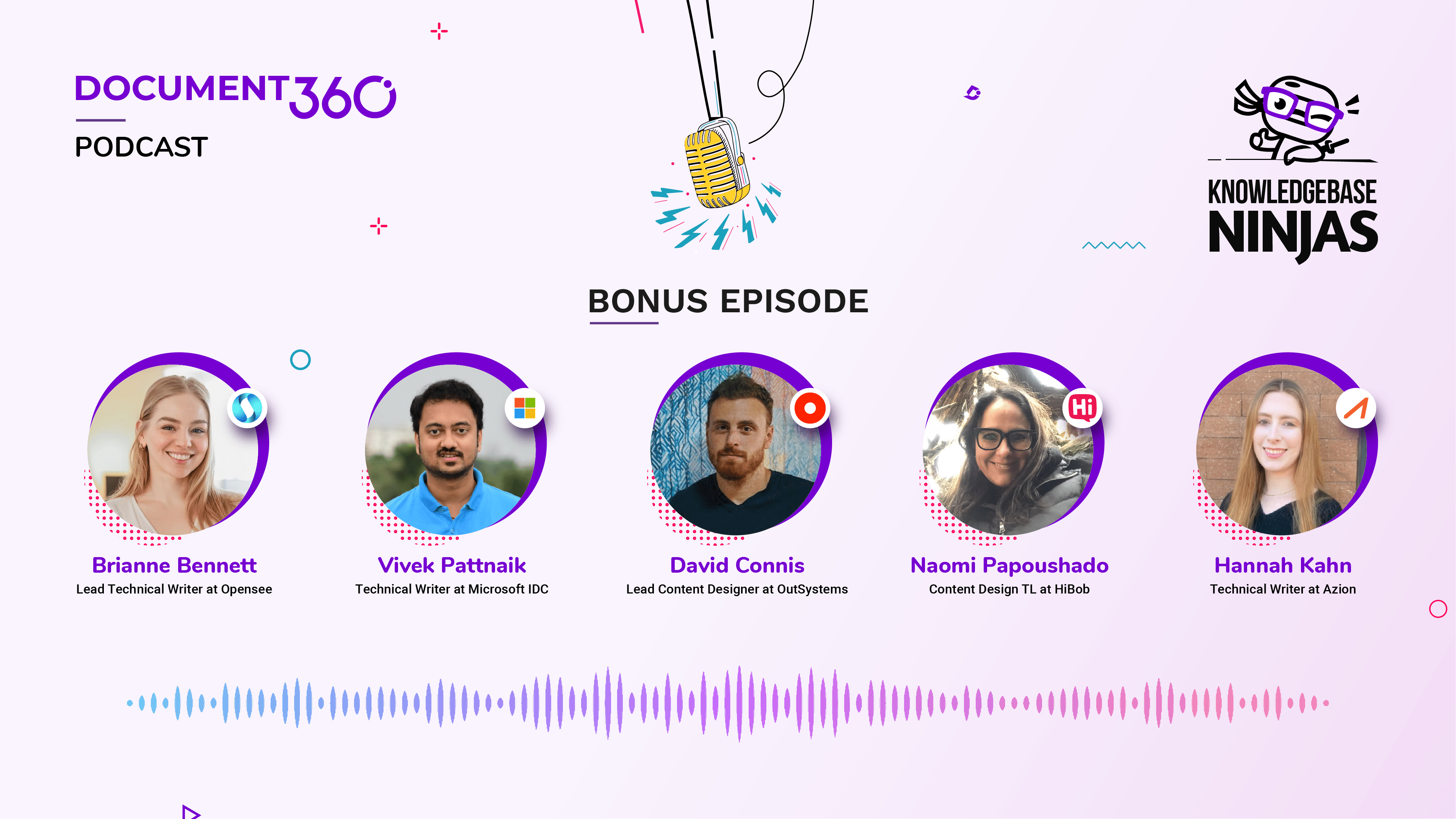
In this special episode on Knowledge base Ninjas episode, five of our previous guests share invaluable insights on UX writing, the integration of UX teams into the documentation process, and tips for those starting out in UX writing.
Watch the Video Podcast here
The Key Takeaways
Current trend in technical writing:
Brianne Bennett, Lead Technical Writer, Opensee, highlights a significant trend, the merge of technical writing and UX writing. She predicts that documentation will become fully integrated into software products, allowing users to access it without leaving the product. She feels that if there is better UX, technical writers will have less documentation to write.
UX team in the documentation process:
Vivek Pattnaik, Technical Writer at Microsoft IDC says, “In our company UX teams are involved in the documentation process from the very beginning. UX writers participate in committee meetings and share ideas on UX design and behavior as the product evolves. Importantly, content is drafted with having the general audience in mind, avoiding heavy technical jargons.”
Effective communication between UX writers and customer support:
“We have a strong relationship with our customer support team and conduct regular check ins every week to identify any gaps in our documentation. We double-check with the support team to ensure documentation accuracy. Documentation is used by our support team, and they also share it with clients who need answers to their queries”, says David Connis, UX/Technical Writer, who previously worked with Squid.
Fostering collaboration for a good user experience:
Naomi Papaushado, former Director of Product Content Strategy & Management, UX Writer at Gong describes a highly integrated process they followed, where one UX writer supports two product managers. She also shares that regular meetings with the development team help to keep everyone aware of the current and future needs, ensuring a cohesive approach to UX writing.
Tip for aspiring UX writers:
Hannah Kahn, Technical Writer, Azion, recommends exploring UX writing guidelines and courses. She says those resources are invaluable for learning how to communicate products effectively to users.
Check out the full episodes for more insights:
- Docs as code vs Dedicated Knowledge Base with Brianne Bennett, Opensee
- Cybersecurity, UX Design, and SEO Documentation with Vivek Pattnaik, Technical Writer at Microsoft
- UX Writing & Technical Documentation In A Digital Space with David Connis of Skuid
- Building developer-friendly API documentation with Hannah Kahn, Azion
Subscribe to Knowledgebase Ninjas:


