EN
EN  DE
DE ES
ES FR
FR PT-BR
PT-BR

AI Summary
- Documentation drift is a mismatch between documentation and software, including content drift, quality drift, and structural drift.
- Causes include disconnected workflows, changing business terminology, rapid feature development, resource constraints, outdated UI screenshots, and insufficient metrics. Drift can create shadow documentation.
- Outdated documentation increases support workloads, reduces productivity and trust, may contribute to customer churn, and can cause AI chatbots and new hires to learn incorrect information. Drift-related issues cost more than $200K annually for a 50-person engineering team.
- Detection and prevention methods include freshness scores, content audits, ambiguity and lint checks, broken-link and schema checks, Docs-as-test, dependency matrices, assigned ownership, and AI-assisted updates with technical writers in the loop.
- MCP-enabled workflows, skills.md files, and AI agents can help maintain accurate content, consistent terminology, and continuously monitored documentation.
AI-generated content. It may contain errors.
See Document360 in action
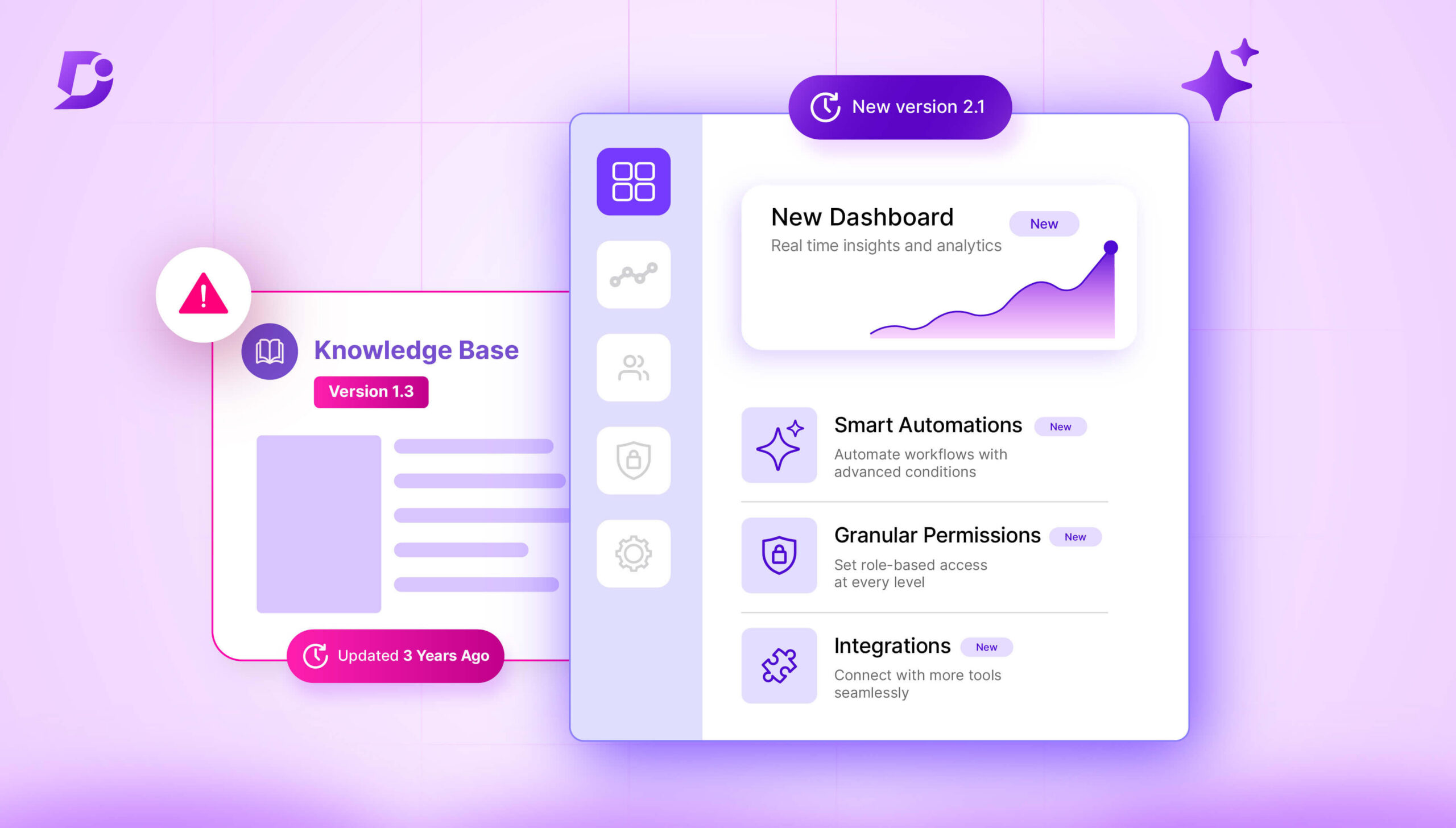
Documentation drift occurs when there is a mismatch between what your documentation article says and what your software product does. This widening gap quietly accumulates over time as your product and technical documentation scale. Documentation drift occurs in different forms, such as
- Content drift, whereby your product changes while your documentation remains static
- Quality drift where your style guide and business terminologies fragment over time
- Structural drift, where your information architecture no longer matches your customers’ mental model
Software products and documentation are in two different systems; thus, it is natural for them to drift apart. Technical writers play an indispensable role in ensuring that documentation keeps pace with software release cycles. Technical writers race to fix the stale documentation as new product features are released and old UI might be made obsolete. The problem with stale documentation is that users believe it is true, and it erodes trust in documentation over time. The documentation drift is very gradual; it is invisible. However, content gaps are easy to fix because they are evident in the escalating volume of customer support tickets.
Why Does Documentation Drift Occur?
According to Driftless, 60% of documentation becomes outdated within six months, and there are numerous reasons documentation drifts. There is a disconnect in internal workflows between customer-facing teams (customer support, customer success, and sales teams) and the technical documentation team. Due to resource bandwidth and time constraints, internal workflows may not work effectively. Often, marketing teams rename a feature to improve positioning, which lays the groundwork for shifts in business terminology. Due to a communication gap or communication lag, the technical documentation team might not incorporate “accepted” business terms into their business terminology management system.
Due to the increasing pace of product feature development, technical documentation consistently lags behind. Documentation is published after the product is released. This effect compounds when the technical documentation is resource-constrained, and developers are shipping more features using AI coding agents. The technical documentation teams are not informed of the UX dependencies for newly shipped features, making many UI screenshots across articles obsolete. The race to fix those outdated screenshots while prioritizing the addition of documentation for new product features accelerates documentation drift. When official documentation is not trustworthy, internal teams create shadow documentation for reference, which amplifies the truth problem.
A lack of appropriate metrics for measuring documentation drift prevents technical writers from prioritizing article fixes. Documentation drift loses priority to the battle of creating new content for newly shipped features.
The Business Impact of Documentation Drift
Outdated documentation does not deflect any customer support tickets, leading to the customer support team answering simple product queries. This leads to increased workloads for the customer support team. The customer support agent also spends more time looking for the right content across a scattered knowledge base, thus leading to productivity loss.
Stale documentation leads to an erosion of trust in your documentation site. Customers are frustrated and might churn if product docs are lagging behind product launches. Incorrect API references, outdated workflows, and inconsistent terminologies often cause confusion among developers, leading to customer churn. The annual cost of documentation issues is more than $200K for a 50-person engineering team alone, a figure that compounds as teams scale.
If there is a RAG architecture-based chatbot on top of your documentation site, then the AI chatbot’s response won’t be grounded in truth. Every wrong response from an AI chatbot grounded in outdated content leads to customer frustration. New hires also learn incorrect conventions from drifted content and, in turn, produce more drifted content.
Stop Documentation Drift Before It Hurts Customer Trust, Try Document360!
Book a Demo
How to Detect and Prevent Documentation Drift
Good measurements help to detect documentation drifting early. A documentation freshness score, based on the last update date, code commits, and broken link checks, helps surface problems for technical writers to fix. Running scheduled content ambiguity checks and content audits, especially for high-traffic articles and procedural content, helps to detect the documentation drift quickly. Continuous checks for broken links, schema mismatches between OpenAPI specs and reference documentation, and missing pages referenced in the navigational menu can be automated and fixed more quickly. The Docs-as-test framework helps to run scripted procedures based on documentation content on the UI to validate procedural docs that are valid and current. Keep business terms in good terminology management systems so that glossary drift can be detected by periodically running lint checks across knowledge base articles.
The technical documentation team should build a dependency matrix of all features and screenshots so that they can estimate the impact of new UI changes or functional changes of particular product features. Using AI agents and skills files to draft content updates automatically when the product specs change, with the technical writer in the loop, helps to prevent documentation drift. Assigning ownership of documentation artifacts helps delegate tasks to the respective team members and accelerates the fixing of content gaps.
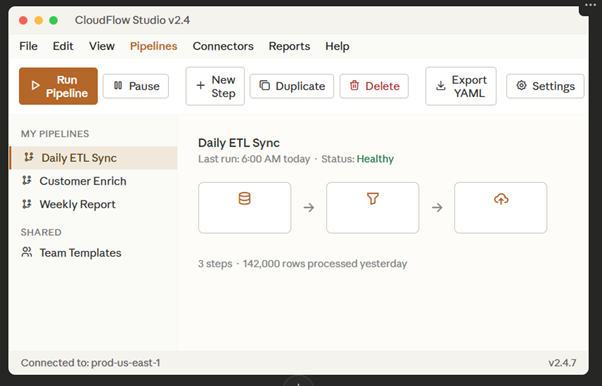
Figure: Current UI of CloudFlow Studio
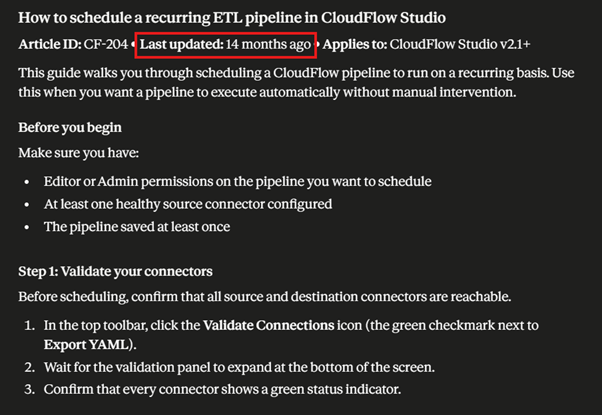
Figure: Docs showing old content that reflects old UI
How LLMs are Affected by Documentation Drift
Documentation drift will negatively impact your customers as they interact with a chatbot that relies on outdated content. Content errors scale at conversation speed, leading to erosion of trust from documentation content. To address documentation drift at the source, it is recommended to use an MCP server-enabled workflow in which your AI authoring tools have access to all necessary context to ensure accurate content. Using skills.md files to encode writing standards such as style guide, terminology and other conventions so that style drift does not happen over time. Using AI agents to regularly check for documentation drift flags issues quickly, enabling fixes to be made quickly. Self-healing docs are gaining popularity after the introduction of AI agents.
Key Takeaways on Documentation Drift
Documentation of drift is not inevitable. It happens when technical documentation is treated as output rather than as part of the product itself. Ensuring the right measurements are in place and that AI agents constantly monitor documentation is the best way to address documentation drift. Technical writers should also dedicate time and effort to addressing content gaps introduced due to new product releases, in addition to writing new content.